Last updated 2026-07-20
Short Answer
The short answer
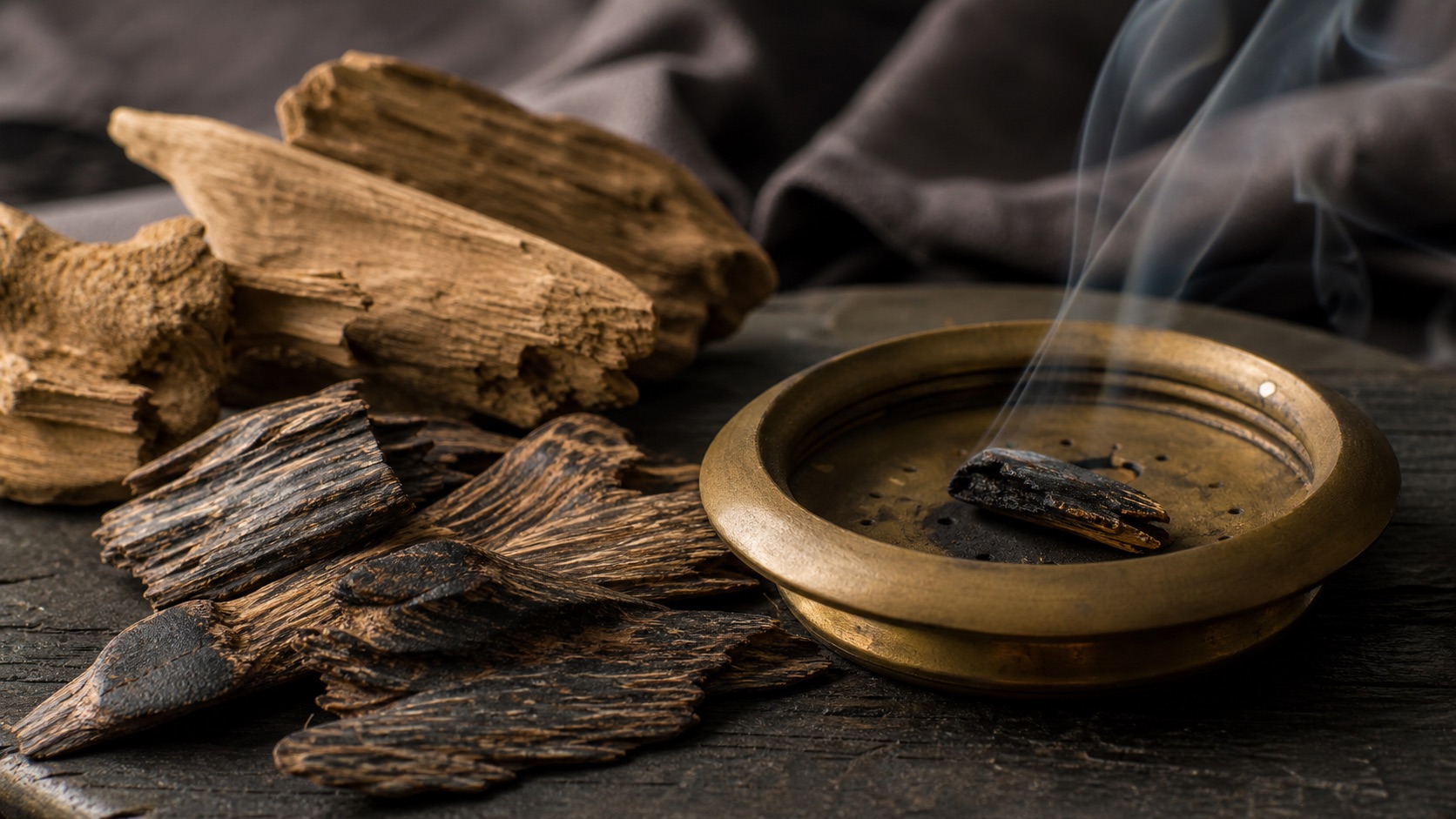
Oud is an aromatic material associated with resin-rich agarwood. In a finished perfume it may smell woody, resinous, smoky, leathery, balsamic, sweet, or medicinal, depending on the material and the notes built around it.
Where oud comes from
Agarwood forms when certain trees, especially species of Aquilaria and Gyrinops, develop fragrant resin in their wood in response to stress such as injury or microbial attack. Resin content, species, origin, age, and processing can all change the material.
What oud smells like
There is no single oud smell. One material may feel warm, balsamic, and softly woody; another may suggest smoke, leather, earth, medicine, fruit, or an animalic edge. A perfume can emphasize only part of that range.
Natural oud and oud accords
Not every fragrance named oud is built around a large dose of natural agarwood oil. Perfumers can construct an oud effect with other woods, resins, leather notes, smoke, spice, and modern aroma materials. The ingredient list is rarely a simple map of how the perfume will smell.
Why oud changes in a composition
Rose makes oud feel plush and formal, citrus creates lift, amber adds warmth, and leather makes the profile drier or darker. This is why two perfumes that both say oud can feel unrelated on skin.
How to approach oud for the first time
Start with the supporting notes. Rose oud and citrus oud are often easier entry points than a dry, smoky, or animalic profile. Sample first when possible, especially if the perfume is expensive or intended as a gift.
FAQ
Is oud the same as agarwood?
Oud is commonly used in fragrance for agarwood and for the aromatic effect associated with it.
Does oud always smell smoky?
No. Oud can be woody, resinous, sweet, leathery, balsamic, medicinal, fruity, or smoky depending on the material and composition.
Is every oud perfume made with natural oud oil?
No. Some use natural agarwood material, some use an oud accord, and some may combine natural and reconstructed effects.
Is oud difficult to wear?
It can be, but polished oud with rose, citrus, amber, or smooth woods is often easier than a very dark or animalic style.